Texas law showed electronics repair is bipartisan. What’s next?
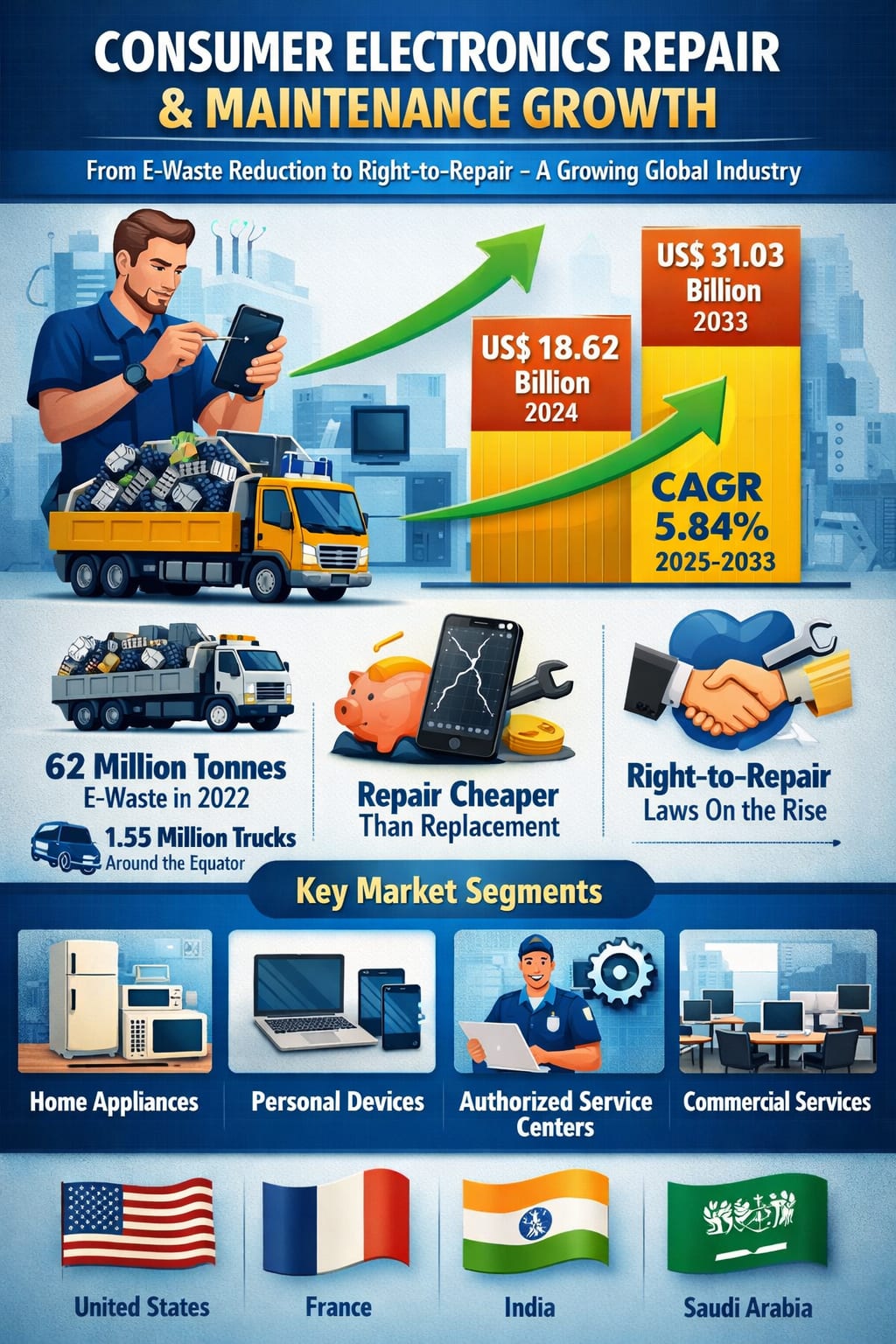
As of this year, legislators in every U.S. state have at some point introduced bills to improve the repairability of consumer technology such as electronics. Texas was the latest to pass such a law and advocates predict even more in the years to come.
Liz Chamberlain, director of sustainability and head of the right to repair advocacy team at iFixit, said “we’re at a point where the concept has always made sense to people that hear about it, but I feel like we broached a level of awareness that we didn’t have previously.”
Right-to-repair laws tend to cover items such as laptops, phones, cameras and other small-format devices, but there’s also legislation focused on automobiles, agricultural equipment and medical devices such as powered wheelchairs. For original equipment manufacturers, that means a growing obligation to share or create repair manuals, certain specialized tools and processes to sell parts.
While OEMs originally balked at the requirements, several have started to shift positions. Google is one notable opponent turned proponent.
Steven Nickel, director of consumer hardware operations at Google, said the repair concept “just aligns really well with Google’s mission, so we love talking about this wherever and to whomever.”
A growing trend
Automotive right-to-repair laws were some of the first passed, followed by agricultural equipment, as both are large, integral investments for consumers.
In 2023, Colorado became the first state to pass a repair law for farm equipment, with more than dozen states also introducing legislation that year. Similar legislation has also been introduced at the federal level for several years.
As personal electronic devices grew more common, attention grew on that sector. Since 2022, California, Colorado, Minnesota, New York, Oregon, Connecticut, Maryland, Texas and Washington have passed right-to-repair laws for consumer electronics. Broadly, the laws require OEMs to make available to independent repair shops and consumers the parts, tools and documentation needed to fix devices covered under the laws, with a few differences between states.
For example, Oregon, Washington and Colorado’s laws also ban the use of software to ensure a device will only operate with specific parts, called parts pairing. Some states also backdate their laws to cover consumer electronics purchased in the past, while some do not.
Some companies, such as Apple, have strongly opposed banning parts pairing, while Google has advocated for it. If repairs are constrained by parts pairing “then you don’t really have right to repair,” Nickel said. “So we think that’s a really critical piece.”
When Texas passed its consumer electronics law, HB 2963, this year, it was lauded as the first “red” state to do so. Chamberlain said it further proves what iFixit has found in polling throughout the years: The right to repair is a solidly bipartisan issue. It often draws sponsors from both parties, she added, because “everybody wants to fix our stuff.”
Gay Gordon-Byrne, executive director of The Repair Association, called Texas’ law, which was based on a model bill from TechNet and the Consumer Technology Association, “a good start.”
“We’re really happy to see a big red state pass it, because it’s good to have some balance,” she said.
CTA, which opposed some right-to-repair bills in the past due in part to security concerns, has changed its stance in recent years. It did not respond to an interview request.
While Texas’ law did not have language banning parts pairing, Nickel said he’s not concerned about losing momentum. The text contained the fundamentals of access to parts and manuals, and “if you start there, that’s great,” he said.
Chamberlain said the Texas law also moved right-to-repair consumer electronics language forward in a big way by closing a persistent loophole that allows OEMs to send customers a new device instead of engaging in the repair process and sharing knowledge and tools.
“All of the bills otherwise that we have passed so far in the U.S. have what we call the ‘Amazon loophole,’ which says if you replace products instead of repairing them, you meet the requirements of the bill, and so far Amazon has done that basically entirely,” she said.
HB 2963 gives consumers the explicit opportunity to choose repair and the OEM must honor that request. Chamberlain said while usage of the clause relies on consumer education, and enforcement is up to the state attorney general, “it’s a big step forward in that it begins to address one of the major problems with the legislation we’ve passed so far.”
In fact, iFixit has put the language to close that loophole in its template bill and hopes to see more states adopt the change in the coming years.
Stakeholder positions adapt
As OEM perspectives start to shift from entrenched opposition to neutrality or even support, e-scrap recyclers and groups such as the Recycled Material Association have also advocated for right-to-repair legislation. ReMA noted in a position paper that “reuse provides an excellent environmental and economic benefit” that recyclers sometimes miss out on due to OEM locks and blocks.
Chamberlain said iFixit is seeing cell phone and laptop manufacturers “do a pretty good job of at least beginning to comply or making moves to comply,” even if she would like to see more manuals and schematics made available.
Nickel added there was initial concern about sharing instruction manuals, but that eased as OEMs realized the bills were “coming from a really reasonable place.”
“They’re not saying you need to give away trade secrets. There’s a lot of aspects where they really considered the manufacturers’ concerns,” he said.
Manufacturers of cameras, video game consoles and household appliances have been less compliant, and Gordon-Byrne said she’s finding a low level of awareness of obligation from some sectors. Trade associations need to do more outreach to ensure that their members know their legal requirements, she said, and The Repair Association will also continue to share the news and encourage people who run into problems getting covered items repaired to submit a complaint to their state’s attorney general.
Looking forward, Chamberlain said her goals are to pass bills that close the “Amazon loophole,” address product categories such as medical devices, and strengthen and protect existing laws.
Nickel also foresees the launch of devices that are easier to repair as more states pass laws and the right-to-repair concept takes off globally. He pointed to the repair directive in the European Union and the French system of assigning a repairability score to devices at the point of sale as trends to watch.
“I think five years from now we’ll be looking at really simplified repairs, because in the sense of any legislation being some type of restriction, I think that drives creativity and innovation,” he said.
For example, Google created a “repair mode” that allows technicians to work on a phone while protecting data, without the need to fully wipe a device, Nickel said. He spends most of his time working on the design-for-serviceability program, which seeks to prioritize repairability.
“We’re thinking about products in 2027 and 2028,” he said. “If you don’t engage at these certain gates and windows, you’ll miss the opportunity. Design is so iterative.”
link