Interview: Nokia manifests future on …

Nokia continues to reap the benefits of technologies developed for mobile devices almost 15 years after exiting the sector, including a host which remain fundamental to the operation of most modern smartphones, the VP and head of its patent portfolio division told Mobile World Live.
Sami Saru (pictured) explained Nokia’s long history in the mobile and radio industries inevitably means it holds a large array of patent families covering all manner of innovations.
The executive works for Nokia Technologies and said the company today holds more than 20,000 patent families, with licensing having become a key revenue source.
Saru explained Nokia prefers to look at its patent portfolio in family-style groups, pooling technologies relating “to the same invention”.
“We think it’s better to talk about the number of patent families rather than the number of individual patents because that gives a better understanding” of “how many different inventions you have actually patented”.
Mobile foundation
Many of those technologies have their origin in the mobile device industry, with Nokia developing some interesting items which it is not necessarily always credited with.
Saru highlighted the ability to download 4K video or to scroll through the files once accessed as examples, explaining these are typical of how any R&D process works because they involved entirely novel concepts requiring a ground-up approach which included “what video codec” was required.
Another function now considered commonplace are embedded cameras.
Saru recalled a “story from the times when there was a crazy inventor who came along with this idea” of putting a camera in a phone. He said at the time it “created some resistance” from Nokia’s engineering teams and even its patent licensing unit, with concerns over how the modules would be incorporated into the devices.
Steven Bartholomew, VP of communications and marketing with Nokia Technologies, highlighted it is also responsible for the technology enabling smartphones to orient the display when rotated from vertical to horizontal.
Another Nokia Technologies function is “the ability to fast forward or rewind what you’re watching on Netflix or YouTube or on Disney+”, Bartholomew said, referring to the ability to scroll on a touchscreen device.
The marketing executive picked up on Saru’s core argument such technologies are now fundamental and used by consumers every day, “but they’re not so well known or associated with Nokia”.
Saru explained technologies which may today seem oddball could ultimately become the foundations of future services not yet conceived. It means a long-term perspective on the potential lifespan of patents is essential: “sometimes people talk about patenting having a 20-year perspective, but I say that it has a 40-year perspective”.
The technologies Nokia developed in the mobile phone space 20 years ago “are still valid and relevant in the portfolio”.
“And now when we are making bets on what is relevant to the future” it is a challenge, because some may last for several decades.
IoTastic
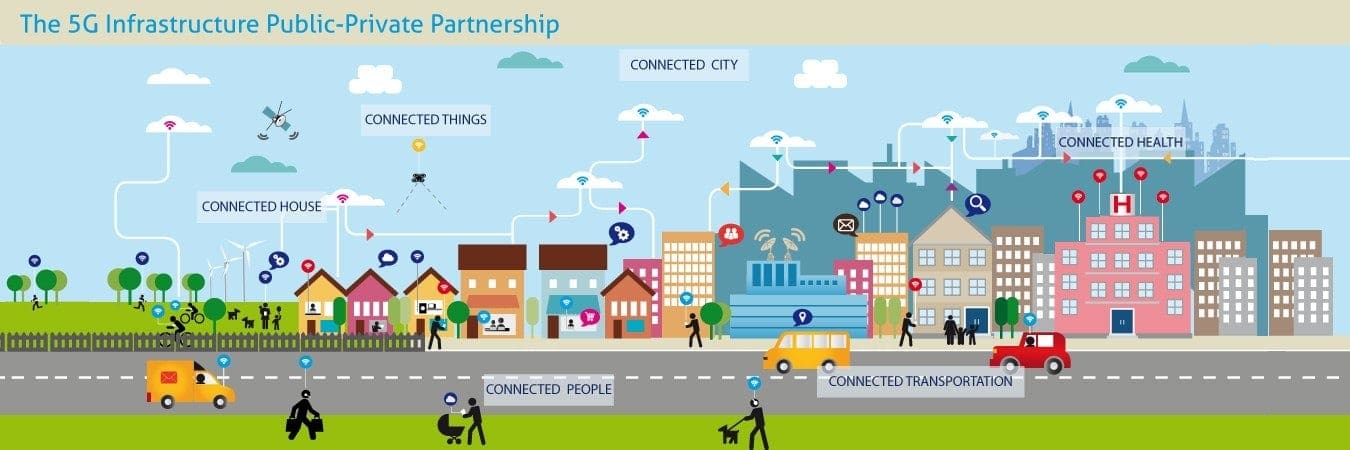
Saru noted Nokia’s mobile device patents are also proving relevant for IoT applications, with a “variety of technologies, device categories” and types of terminal “benefitting from the investment made to enable” interoperability in the consumer device segment.
He noted IoT devices increasingly operate globally or in fast-moving environments including the automotive sector, “where cellular connectivity is a big part of how you use cars nowadays”, providing lots of information to manufacturers about individual vehicles.
Saru identified smart metering and point-of-sale terminals as other sectors where the knowledge Nokia has regarding connectivity can be applied.
“There is, I think, 1 billion new devices every year coming to the market having technologies that Nokia has been developing.”
Bell tolls
Nokia swelled its patent coffers when it acquired Bell Labs in 2016.
Saru highlighted the division brings 100 years of technology development to Nokia, much of which now seems commonplace but may well have been deemed unusual or idiosyncratic at the time.
He pointed out this is the way with a lot of technology work, emphasising generating revenue from Nokia’s patent families is almost a byproduct of a need to engineer systems to produce a given result, albeit one which is now highly lucrative for the vendor.
Among the many creations credited to Bell Labs is the transistor, which Nokia describes as the “big bang” of electronics; the solar cell; the laser; the Telstar satellite; and the Unix computer OS, asserted as paving “a path to the internet”.
One of the next big technology development areas is 6G, a field Saru explained Nokia Technologies is already an active player in, contributing to early phases of standards development which “all the companies in the ecosystem can benefit from and deliver better service for their customers”.
He added one of the benefits of researching and developing technologies which are employed in Nokia’s own products is then being able to also licence them to third-parties and gain additional revenue.
Saru described the process as a “virtuous circle”, whereby Nokia Technologies’ investment in fresh fields pays off while removing the need for other companies to pump cash into the same areas.
Changing times
Mobile phones may have dropped off the list of technologies Nokia needs in 2025, but Saru noted its Networks business unit keeps his division busy, particularly due to an increased focus on optical and other fixed-line equipment.
He said the core goal is unchanged, though, namely an “aspiration to create the best possible technology for the industry”.
“There is lots of R&D activity happening in Nokia”, Saru explained, highlighting a more than €4 billion investment.
Not every field of research results in a patent because not every technology has a role within Saru’s division.
Sometimes Nokia wants to retain exclusivity or waits for a technology to become relevant before going through the patent process, Saru explained.
“I look at this broadly in a sense that it basically may enable Nokia to differentiate [its] products from someone else’s”.
“It may also give us favourable licensing terms” when it requires access to technologies developed by third parties.
“We are making bets on technology areas and hoping those technologies and solutions that we have been inventing and patenting are relevant also in the future.”
Unchanging times
Honor, Oppo and vivo were among the smartphone vendors Nokia Technologies struck licensing deals with during 2024, adding to agreements with Huawei, Apple and Samsung.
In an earnings report for 2024, Nokia noted the unit was now in a stable period “with no major smartphone licence agreements expiring for a number of years”. This was reflected in its numbers, with net sales of €1.9 billion compared with €1.1 billion in 2023, and operating profit rising from €734 million to €1.5 billion.
link