Innovation Drives Medical Instruments and Supplies Companies’ Success
Newsweek recently partnered with data firm Plant A to publish America’s Greatest Companies 2025, which featured companies across several industries. The 650 companies across 56 industries were recognized for strong performances in four scoring categories: workforce performance, patent and design advancements, environmental commitment and ethical compliance.
When patents and designs are factored in, it’s not surprising that a significant percentage of the companies listed were in a health care-related category, including: medical instruments and supplies, biotechnology, medical distribution, medical care facilities and drug manufacturers.
Dexcom, Insulet, Boston Scientific, Stryker, Abbott Laboratories and iRhythm Technologies were featured as the top performers in the Medical Instruments and Supplies category. Many have incorporated artificial intelligence (AI) into their products to provide customers with a more personalized experience, aimed at helping them with their specific medical needs.

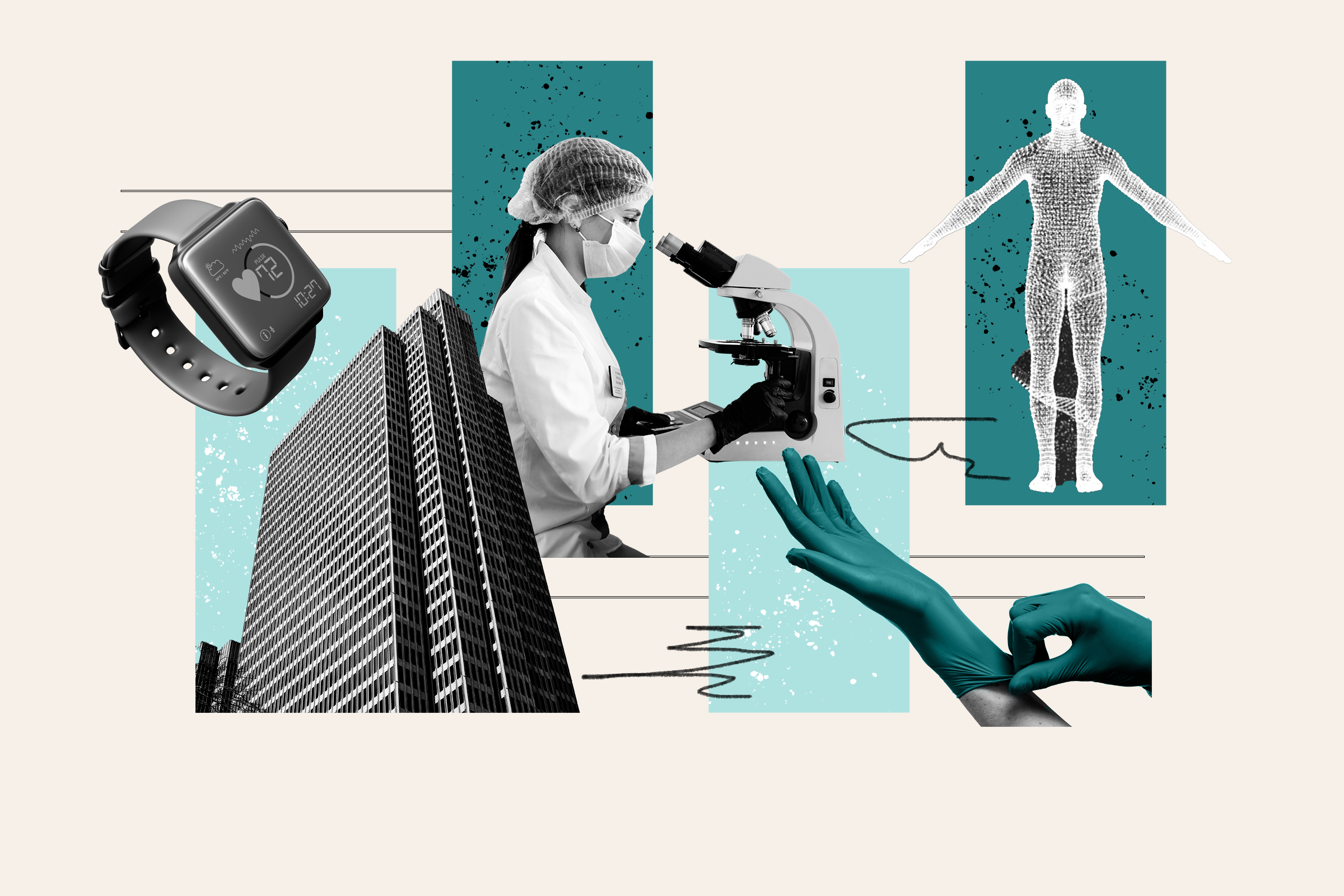
Photo-illustration by Newsweek/Getty
Dexcom
Founded in 1999, Dexcom topped the ranking for this category. The company specializes in providing uniquely user-friendly and connected continuous glucose monitoring systems (CGMs), and it introduced Stelo, the first over-the-counter FDA-approved CGM, a year ago.
The Dexcom G7 CGM was also released in October of 2022 and is a huge improvement on the previous model, the G6. The G7 provides real-time assistance to diabetes patients, with a significantly shorter 30-minute sensor warmup time compared to the G6 (2 hours), and offers glucose readings on Apple Watches. Additionally, it’s 60 percent smaller than the earlier model.
Dexcom also recently launched an AI-powered meal logging feature across its glucose biosensing portfolio, which includes Stelo, the Dexcom G7 CGM and the G6. This feature enables users to take a photo of their food within the app, and AI automatically generates a description of the meal and its ingredients. This officially makes the Dexcom G7 the sole American prescription CGM to include photo logging.
Insulet
Insulet was founded based on a father’s desire to create a better solution for delivering insulin to his son, as opposed to multiple insulin injections a day. This fueled the creation of Omnipod, which is now the No. 1 prescribed insulin pump.
The company’s latest model, the Omnipod 5, is a small device that’s completely user-friendly and delivers insulin without the use of cumbersome tubes or injections, simplifying the lives of those with diabetes immensely. The device has been demonstrated to reduce A1C or glycated hemoglobin by up to 22 percent.
In June of this year, Insulet and Marvel announced a collaboration to launch a comic book character with Type 1 diabetes and who will use the Omnipod 5. The comic features Omnya, a teenager in high school who struggles with managing her Type 1 diabetes until she comes across the Omnipod 5.
Within the announcement, the company also included data from an online survey that Thrivable conducted on behalf of Insulet about cultural representation of people with diabetes. According to the survey, 94 percent of respondents with Type 1 diabetes said an accurate representation of living with diabetes is important. However, in the year prior, only about half could recall encountering such representation.
Boston Scientific
Boston Scientific’s main objective is to develop minimally invasive medical technology devices.
What makes the company unique is the vast range of medical specialties and therapeutic areas it develops products for, including devices like the EMBLEM MRI S-ICD system, an implantable cardioverter-defibrillator for monitoring and treating irregular heart rhythms and the TheraSphere Yttrium-90 Glass Microspheres for liver cancer therapy.
Boston Scientific has further amplified its impact through its creation of the AI algorithm AVVIGO+ multi-modality guidance system, which can perform intravascular imaging and physiology procedures.
Stryker
Stryker is a global med-tech leader primarily known for its product solutions in med-surg, neurotechnology and orthopedics.
The company recently received clearance from the FDA for an Incompass Total Ankle System, which aids patients with damaged ankle joints relating to rheumatoid, post-traumatic or degenerative arthritis.
It has also recently talked about its commitment to sustainability, emphasizing its role as a “single-use” medical device reprocessor.
Abbott Laboratories
Abbott Laboratories, not unlike many of the other companies on this list, has developed products for a wide range of medical needs, including cardiovascular and neuromodulation devices.
Abbott has also ventured a step further and manufactured products in the nutrition space, namely Ensure shakes and powders and Similac infant formula, both very well-known and successful products in the industry.
iRhythm Technologies
According to Quentin Blackford, president and CEO of iRhythm Technologies, there are 27 million patients in the U.S. who are unaware they have arrhythmias. iRhythm Technologies has nearly 70 percent U.S. market share with its patch-based technologies to detect arrhythmias.
“We are a company that stands behind our product. We have no problem letting the data speak for itself,” Blackford told Newsweek. “We have 99 percent physician agreement with the outcomes of our recommended diagnoses of arrhythmias.”
Over 60 percent of all arrhythmias are detected after two days of monitoring, and older wired devices are only worn for about 48 hours maximum, which results in a vast majority of older monitors failing to find arrhythmias while patients are able to wear iRhythm’s Zio ECG monitor patch for a maximum of 14 days at a time and never have to take it off during that period.
The company then utilizes AI to comb through electrical signals it finds from the monitor to identify where arrhythmias exist, and it was the first in the market to do this. iRhythm has also introduced new AI capabilities to proactively identify patients who likely have arrhythmias but have yet to discover them.
“We value innovation. We always want to stay on the cutting edge of technology,” said Blackford. “And we’re always going to invest to stay on the cutting edge of it.”
Blackford also spoke on the workplace culture at iRhythm and the significant role it’s played in the company’s success.
“When people are engaged, when they’re enjoying the workplace, they will run through walls for success,” Blackford said, “and that’s what we have here at iRhythm.”
link