
Airtel and Vodacom sign network infrastructure-sharing agreement
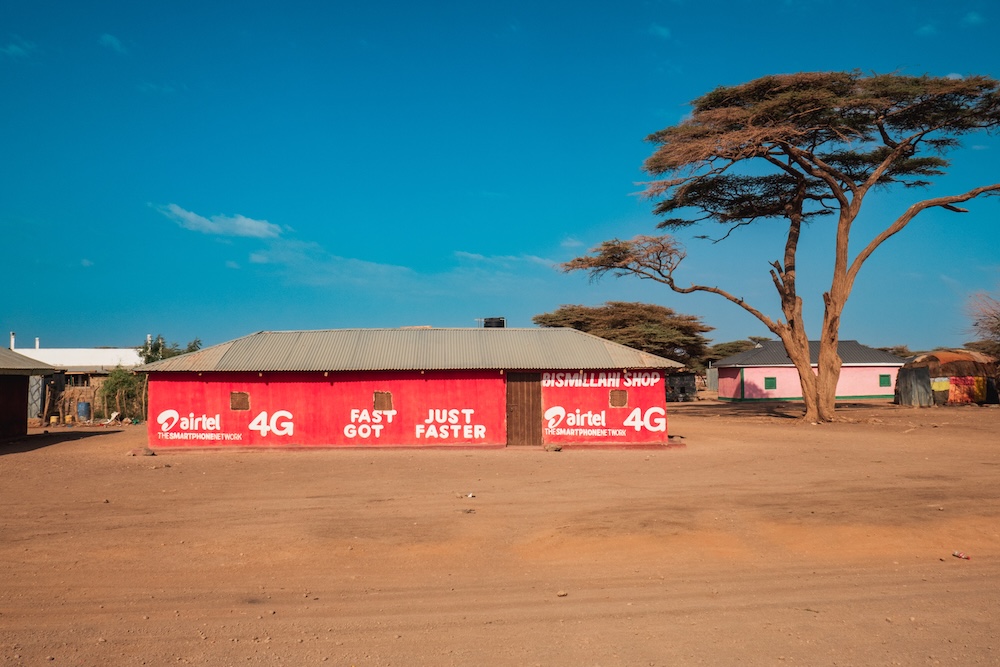
The move follows an earlier MTN-Airtel network sharing deal and spells a new phase for Africa’s mobile infrastructure
Sub-Saharan Africa’s telecom sector is undergoing a structural shift toward collaborative infrastructure deployment, driven by the dual pressures of rising capital requirements and expanding coverage demands. The strategic partnership announced between Airtel Africa and Vodacom Group, covering Mozambique, Tanzania and the Democratic Republic of Congo, reflects operators’ increasing recognition that shared infrastructure models can deliver better returns on investment, plus they can accelerate market penetration in underserved areas.
This development follows a pattern established earlier in 2025 when MTN Group and Airtel Africa announced infrastructure sharing agreements in Uganda and Nigeria, suggesting that collaborative approaches are becoming standard practice rather than exceptional arrangements.
The convergence toward sharing models indicates that operators are prioritising capital efficiency and coverage expansion over traditional competitive barriers, particularly as regulatory frameworks evolve to accommodate such partnerships.
“This partnership is aligned with our unwavering commitment to delighting our customers by always making our network available to them even in the remotest locations,” said Airtel Africa CEO Sunil Taldar.
The financial pressures driving these partnerships are evident across the sector. Vodacom Group, despite achieving “as much as a 20-25% benefit in terms of the network, through our big global procurement,” still faces ZAR 12 billion spend in South Africa this financial year alone, and group capex guidance has been reported at higher levels elsewhere. CEO Shameel Joosub recently emphasised that priorities include 5G rollout and “making sure capacity, as the traffic’s growing, we always prioritise capacity first,” highlighting the scale of ongoing investment requirements.
Airtel’s financial results in July demonstrated a similar investment momentum. The operator deployed over 2,300 new sites in the quarter ending June 2025, reaching 37,579 total sites, while expanding its fibre network by 2,700 km to exceed 79,600 km. With capex guidance of $725-750 million annually, such substantial infrastructure investments make sharing arrangements increasingly attractive for optimising returns.
Upgrade complexity
The complexity and cost of individual network upgrades further support network infrastructure sharing. Vodacom is conducting a complete RAN swap in Tanzania, replacing its Nokia network with Huawei equipment over two years. Joosub noted this creates “accelerated depreciation when you go through a swap” and accounting complexities, illustrating the financial burden that sharing arrangements could help alleviate.
MTN’s Ralph Mupita highlighted the broader strategic context, noting operators are seeing “strong structural demand for digital and financial services across our markets.” However, he pointed out that “there are opportunities within regulatory frameworks for sharing resources to drive higher efficiencies and improve returns,” reflecting how competitive dynamics are evolving toward collaboration.
Regulatory acceptance is also supporting this trend. Vodacom’s pending Maziv fibre deal saw the Competition Commission become “supportive of the deal, given the enhanced remedies,” suggesting regulators recognise the benefits of shared infrastructure for expanding coverage efficiently. The caveat here is that the deal is still subject to court consideration and subsequent closing.
Fibre-sharing
The partnerships’ emphasis on fibre sharing addresses critical capacity constraints. As data usage across Airtel’s network increased by 47.4% in the recent quarter, with data customers growing 17.4% to 75.6 million, robust backhaul infrastructure becomes essential. Vodacom’s Tanzania network data traffic grew 23-24%, supporting higher data revenue – and demonstrating the revenue potential that adequate infrastructure can unlock.
“Accelerating the deployment of fibre connectivity is a key enabler in the acceleration of 4G and 5G technologies in Africa,” said Taldar. With Airtel operating 1,479 5G-enabled sites across five countries and Vodacom activating 5G networks in Egypt, shared infrastructure becomes a key path to rolling out at scale.
The MTN-Airtel agreements have already looking at expanding beyond their initial Uganda and Nigeria scope, with the operators exploring opportunities in Congo-Brazzaville, Rwanda and Zambia. This expansion demonstrates how initial partnerships can rapidly scale across multiple markets, with agreements covering RAN sharing and fibre infrastructure development.
Taldar acknowledged that “even as competitors, it has become a business imperative for us to collaborate in the provision of critical infrastructure required to build resilient network with strong capacity to support the emerging digital technologies.”
link