Airport Retailing Consumer Electronics Market Valued at USD
Airport Retailing Consumer Electronics Market
The airport retailing consumer electronics market is evolving rapidly as global airports transform into vibrant retail hubs. Valued at USD 2,383.8 million in 2025, the market is projected to reach USD 3,166.6 million by 2032, growing at a CAGR of 4.18% during 2026-2032. This growth is fueled by increasing air passenger traffic, rising demand for premium portable devices, and strategic expansion of airport commercial spaces.
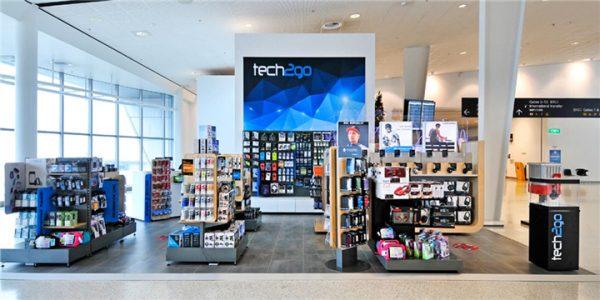
Airport retailing consumer electronics refers to the sale of electronic goods-including smartphones, tablets, headphones, wearables, chargers, and travel-friendly gadgets-within airport premises. With global travelers depending more on digital connectivity, entertainment, and productivity during transit, the segment has become one of the fastest-growing in travel retail.
Get Sample Copy of Research Report: https://www.infiniumglobalresearch.com/form/2011?name=Sample
As airports evolve into lifestyle destinations, consumer electronics retailing is shifting toward immersive, omnichannel, and premiumized experiences, ensuring sustained market expansion over the coming decade.
✅ Key Highlights from the Report
➤ The global airport retailing consumer electronics market will grow from USD 2,383.8 million in 2025 to USD 3,166.6 million by 2032.
➤ Electronic devices remain the largest product segment, led by smartphones and travel-friendly laptops.
➤ Post-security outlets dominate retail channels, benefiting from higher dwell times and duty-free incentives.
➤ Asia-Pacific leads the market, while Europe is set to record the fastest CAGR.
➤ AR/VR demos, AI-powered inventory, and biometric payments are transforming airport retailing.
➤ Rising millennial and Gen Z travelers are fueling demand for compact, high-spec consumer electronics.
✅ Market Segmentation
The airport retailing consumer electronics market is segmented by product type, airport size, store location, and sales channels.
By product type, electronic devices account for the largest share, driven by strong demand for smartphones, tablets, laptops, and cameras. These are essential for business and leisure travelers who prioritize connectivity and productivity on the go. Accessories such as headphones, smartwatches, power banks, and travel adapters form the second-largest segment, benefiting from impulse purchases and tech-upgrade trends. Other niche electronics, including VR headsets and gaming consoles, are also emerging in premium international hubs.
By airport size and store location, large international airports contribute the highest revenues due to high passenger volumes and extensive retail footprints. Post-security stores dominate sales, supported by duty-free advantages and premium product availability. Pre-security and aerocity outlets are growing as airports diversify shopping touchpoints for both passengers and visitors. Specialty electronics stores, often run by global duty-free retailers and brand-exclusive outlets, lead the sales channel segment, while supermarkets and general retail contribute moderately.
✅ Regional Insights
Asia-Pacific dominates the global market, supported by booming aviation traffic, infrastructure expansion, and rising consumer spending power. Key hubs such as Shanghai, Beijing, Delhi, Singapore, and Seoul drive substantial retail revenues. Rapid digital adoption, coupled with airport-exclusive electronics bundles and immersive tech lounges, further strengthens APAC’s leadership. Duty-free strategies and increasing tourism also make the region a hotspot for premium gadget sales.
Europe is expected to record the fastest CAGR during the forecast period. The modernization of major airports in Germany, the UK, France, and Spain, combined with rising business and leisure travel, fuels growth. European airports are leveraging digital-first retail formats, sustainability-driven electronics, and personalized duty-free strategies. North America follows closely, with demand supported by high disposable incomes, business travel, and premium electronics adoption. Meanwhile, Latin America and the Middle East & Africa remain emerging markets, offering whitespace opportunities in new airport retail zones and rising tourism sectors.
Read More: https://www.infiniumglobalresearch.com/market-reports/global-airport-retailing-consumer-electronics-market
✅ Market Dynamics
Market Drivers
The primary driver for the airport retailing consumer electronics market is rising demand for portable and premium gadgets. Travelers increasingly rely on smartphones, laptops, headphones, and wearables for entertainment, connectivity, and productivity during flights and layovers. This has turned airports into high-margin retail hotspots.
Strategic airport expansions also boost demand, as international hubs upgrade terminals and expand commercial spaces. The integration of duty-free zones, digital catalogues, and omnichannel retailing enhances convenience and shopping engagement.
Moreover, millennial and Gen Z travelers, who form a large portion of the global passenger base, are tech-savvy and spend heavily on electronics. Coupled with luxury-driven travel retail, these consumer demographics drive strong impulse buying trends.
Market Restraints
The market faces significant restraints, including high operating costs and concession fees at international airports, which reduce retailer profit margins. Limited display space and strict airport security regulations also restrict inventory availability and restocking efficiency.
Currency fluctuations and global price transparency pose another challenge, as informed travelers often compare airport prices with online retailers, reducing the perceived value of tax-free purchases.
Additionally, short passenger dwell time and staff turnover impact customer service and sales performance. Airports also impose stringent compliance standards, making operations complex for small and independent retailers. Unless these challenges are addressed through faster checkout, staff training, and digital signage, growth potential may remain constrained.
Market Opportunities
Opportunities lie in technology-driven innovations. Smart shelves, AI-based inventory systems, and AR/VR product demos are enhancing customer experiences and operational efficiency. Retailers investing in biometric payment solutions, automated checkout, and QR-based product information will gain a competitive edge.
Another major opportunity is the rise of omnichannel retailing, where passengers pre-order online and collect products at airports. This model reduces inventory risk while boosting sales.
Sustainability also offers a whitespace opportunity. Demand for eco-friendly accessories, renewable-powered retail stores, and circular economy practices aligns with consumer values and airport sustainability commitments.
Finally, exclusive airport bundles, premium brand partnerships, and experiential tech lounges provide competitive benchmarks that retailers can replicate across regions.
✅ FAQs
➤ How Big is the Airport Retailing Consumer Electronics Market?
➤ Which Region Dominates the Global Airport Electronics Retail Market?
➤ Who are the Key Players in the Airport Retailing Consumer Electronics Market?
➤ What are the Major Drivers of Growth in the Airport Consumer Electronics Market?
➤ Which Product Segment Holds the Largest Market Share?
✅ Company Insights
✦ Flemingo
✦ Bahrain Duty Free
✦ Regstaer
✦ KING POWER CORPORATION
✦ Capi-Lux
✦ Avolta
✦ Lagardère Travel Retail
✦ Dubai Duty Free
✦ WH Smith PLC
✦ EVERRICH
✅ Recent Developments
■ Avolta expanded its airport electronics retail network with new digital-first outlets in Asia-Pacific.
■ Lagardère Travel Retail launched AR-driven demo zones in European airports to enhance engagement.
✅ Reasons to Buy the Report
Gain detailed insights into global and regional airport retail trends.
Understand category-level growth across devices, accessories, and niche electronics.
Benchmark leading companies and competitive strategies.
Identify whitespace opportunities in emerging markets.
Access a practical roadmap for aligning portfolios with consumer-driven growth.
✅ Conclusion
The airport retailing consumer electronics market is set for steady growth, driven by rising passenger numbers, digital transformation, and the increasing appetite for premium travel gadgets. Electronic devices remain the leading category, while accessories benefit from impulse and convenience-driven purchases. Asia-Pacific leads the market, and Europe is expected to expand at the fastest pace.
Competitive benchmarks show that success depends on tech-driven personalization, duty-free optimization, and strategic partnerships with airports. Whitespace opportunities exist in sustainable electronics, omnichannel pre-order models, and immersive tech lounges.
Contact Us:
[email protected]
Infinium Global Research LLP
Ravet, Pune
412101
About us:
Infinium Global Research is a business consulting and market research firm; a group of experts that caters to fulfilling business and market research needs of leading companies in various industry verticals and business segments. The company also serves government bodies, institutes and non-profit/non-government organizations to meet their knowledge and information needs.
Through our information services and solutions we assist our clients to improve their performance and assess the market conditions to achieve their organizational goals. Our team of experts and analysts are engaged in continuously monitoring and assessing the market conditions to provide the knowledge support to our clients. To help our clients and to stay updated with the advances and inventions in technology, business processes, regulations and environment, Infinium often conducts regular meets with industry experts and opinion leaders. Our key opinion leaders are involved in monitoring and assessing the progress in the business environment, so as to offer the best opinion to our clients.
This release was published on openPR.
link