Can A Solar Roof Really Increase An EV’s Range?
A while back, I was having a conversation with my uncle about alternative ways to power a car. He asked me if, one day, an electric vehicle’s (EV) regenerative braking system could become powerful enough to recharge a car’s battery entirely.
My answer was that a battery requires a lot more energy for a full charge than most people think. Yes, the kinetic energy released by the resistance of an electric motor trying to turn in the opposite direction – what we call regenerative braking – may generate enough energy to add a few miles of range. But there’s just not enough power being generated, and not for long enough, to significantly increase a battery’s state of charge.
I use that conversation with my uncle as a parallel for other forms of energy transfer debates, like, say, solar panels on the roof of a car. Yes, in theory, since cars are parked outside most of the time, it would only make sense for them to capture sunlight and transform it into electricity to power their battery. And some automakers have offered solar-panel roofs on some of their models in the past. But, for now, the amount of energy these panels can capture is minuscule compared to what an EV battery requires. But the technology is improving!
To provide the most accurate and up-to-date information, this article uses data sourced from various manufacturers and authoritative sources.
From Powering Climate Control Systems To Increasing EV Range

A recent article in Automotive News got me interested in the matter. It highlighted some of the recent advancements in solar panel technology, particularly on the roof of cars. Not many mainstream automakers have attempted this, but there have been a few notable examples.

We can roll the clock back as far as the late 1990s when Audi introduced a solar sunroof for its flagship A8 sedan. Back then, the technology powered the climate control system and allowed for an always well-ventilated interior, even when the engine wasn’t running. The Toyota Prius was also a pioneer in solar panel technology. The early systems operated similarly to Audi’s setup, but today’s Prius plug-in hybrid has a solar roof that can actually add range to the car. Sort of.
Modern Solar Panel Charging Still Has Its Limitations
While impressive compared to the early systems, the Prius’ solar roof’s maximum capture rate is relatively low at 85 watts, or 2.2 kWh. That equates to about 6.4 miles of additional range. At that rate, it would take about a week to fully charge the car.
So, yes, it’s possible to charge the battery of an EV or a plug-in hybrid vehicle (PHEV) using only solar power. But that will take a very long time, more time, in fact, than charging using a level 1, 120-volt home outlet. It also needs to be sunny the entire time. Add a few clouds or rain to the mix, and you’ve just increased that charging time by a few extra days.

Jan Henning Mehlfeldt, a member of the management board at Webasto, the company behind Audi’s original solar design, believes the technology is only starting to show its full potential. He remains enthusiastic about where it’s currently at and how rapidly it’s evolving, seeing a revolution coming soon in the world of EVs.
There’s very high interest in the technology, and the roof is the perfect place for it. It’s a statement. But there is still a discussion about what’s in it for customers.

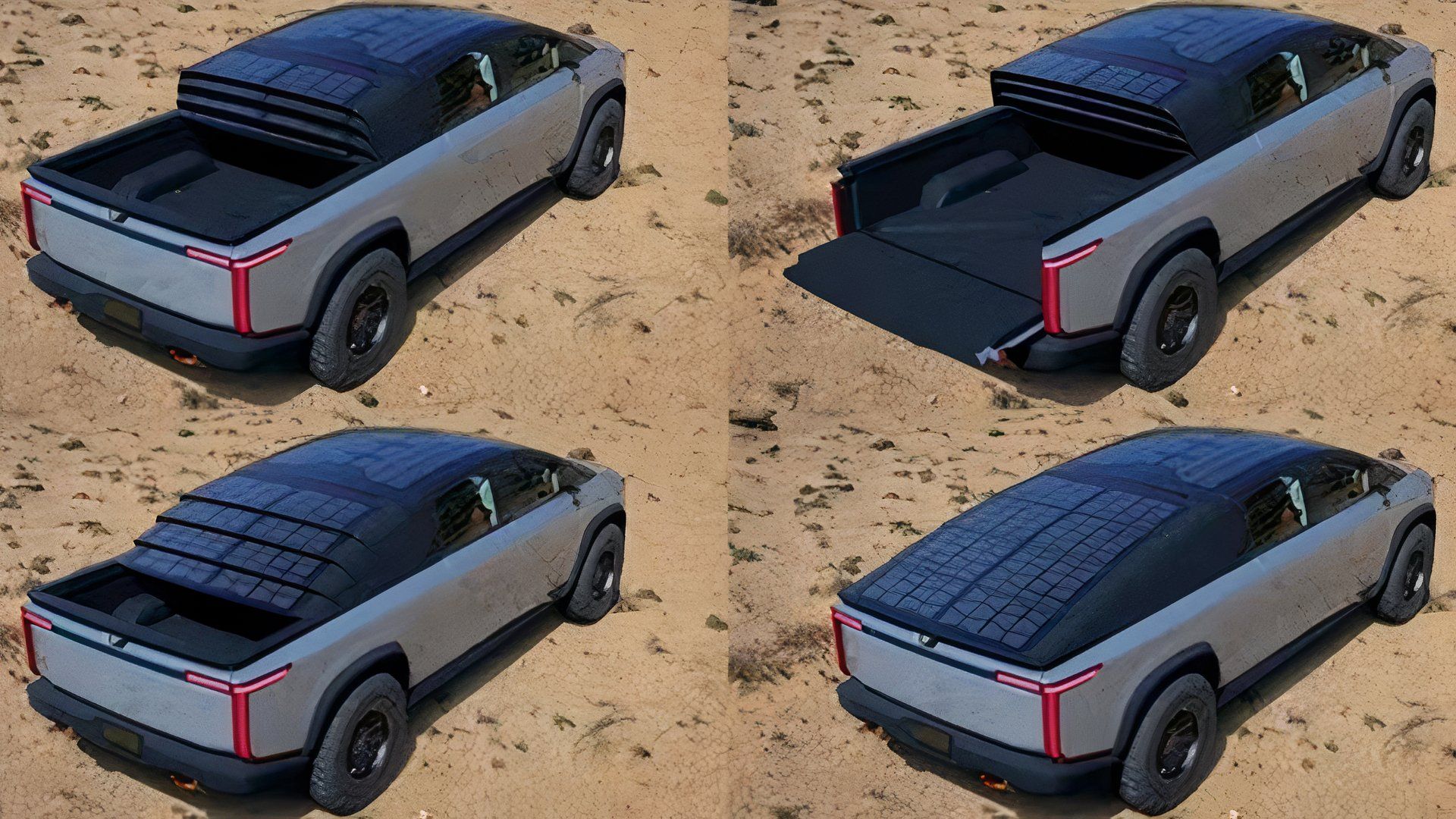
He’s right. Consumers will only truly commit to solar technology if it gives them actual gains. There’s also the question of cost. The Fisker Ocean was set up to offer a SolarSky solar roof. It was developed and built by Webasto with the promise of adding 1,500 miles of extra range per year, in ideal conditions. i.e. California. But among the three trim levels the Fisker Ocean was offered in, only the $68,000, top-spec Ocean Extreme had the fancy roof. That’s a steep price to pay for only 1,500 additional miles per year.
Experts Assure That Solar Panel Tech Is Advancing

Maximilian Hofbeck, Webasto’s director of product management, says the amount of power captured by solar roofs is improving each year. For reference, Fisker’s SolarSky roof achieved about 23 percent efficiency at capturing and transferring energy to the battery. Webasto says it’s already capable of increasing that efficiency to roughly 27 percent. I mean, that’s progress. So, yes, solar roofs can increase an EV’s range. But just a bit, for now. The technology does, however, remain promising. It’s also nice to see companies like Webasto invested in its development.
link