TVA Shawnee Site leads solar technology | News
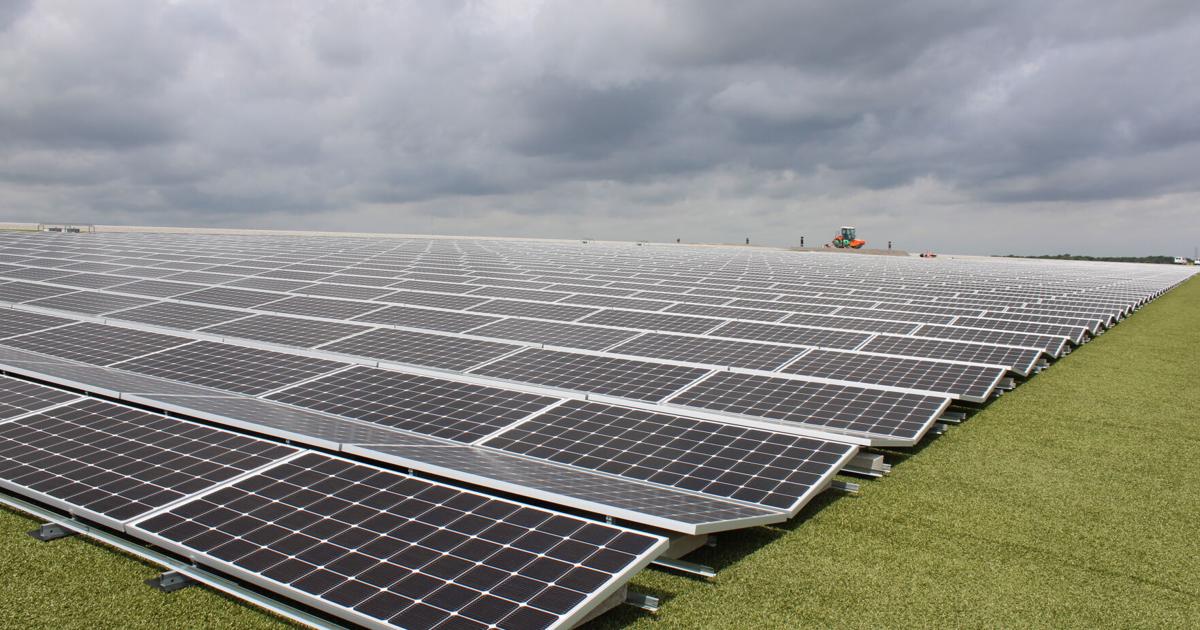
PADUCAH — Tennessee Valley Authority is leading innovative energy technology efforts with a first-of-its-kind solar field on a Shawnee Fossil Plant closed coal ash site.
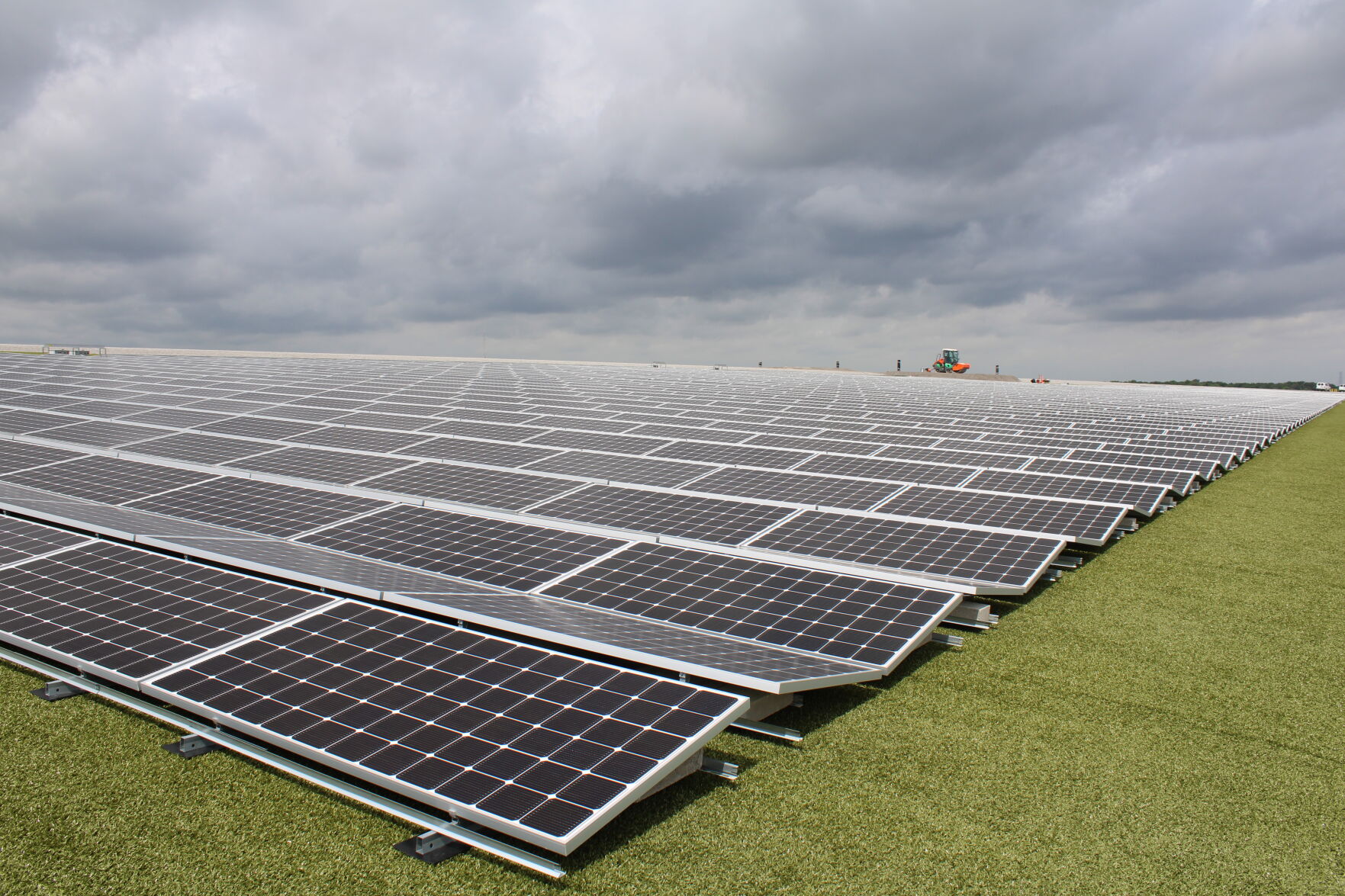
Tennessee Valley Authority’s solar project is under construction, with nearly 30,000 solar panels out of 240,000 already in place. It is expected to enter service in 2028.
The project, called Project Phoenix, is under construction, with nearly 30,000 solar panels out of 240,000 already in place. It is expected to enter service in 2028.
Project Phoenix meets TVA customers’ growing demand for power, while maximizing the company’s assets, such as the decommissioned coal ash site.
“We can generate energy in a new way, but within the same footprint that we’ve occupied for decades,” said TVA Civil Projects Group General Manager for Strategy and Engineering Patrick Kiser. “Part of that is capitalizing on being so close to the transmission infrastructure, so we have the plant here, and our switchyard for the plant there, and us being so close just reduces the cost that it takes for us to generate the power here and then get it on the bulk grid for distribution.”
Kiser described the project as a product of American innovation, reclaiming unusable land for productivity.
“In this case, this is really the coalescence of some new technologies that allow us to make use of this landfill property that you really couldn’t make much use of before,” he said. “We have to maintain our regulatory requirements, but we have to do it in a way that’s efficient for power production.”

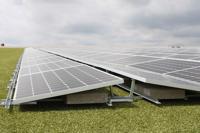
The low profile of the solar panels allows for high energy density, maximizing the efficiency of the solar field.
In order to maximize the solar field’s energy production, TVA worked with its technology partners, who designed and developed a specialized racking system. The system allows for panels to be closer to the ground, while still receiving maximum sunlight. Other solar fields position panels at an angle, higher off of the ground to avoid shading, which reduces the number of panels that can fit in one area.
“The low profile allows us to have a high energy density there, right? That really kind of maximizes what you can generate from a smaller footprint,” Kiser said.

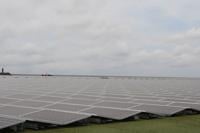
Once complete, Project Phoenix will generate 100 megawatts of solar power.
The high density array means the solar field will produce 1 megawatt per 3 acres, compared to other solar fields which average 1 megawatt every 10 acres. The 270-acre field will generate 100 megawatts of solar power — enough to power approximately 58,000 homes.
The coal ash site underneath the solar field is covered in synthetic turf, which minimizes groundwork costs, is lower maintenance than grass, and allows for TVA to still access the coal ash, which can be used for building materials.
“In the future, if a need arises … You could move it aside, cut the turf, roll it back, harvest for the purpose that you intend to, reshape it, roll it back, seal it back up, and redeploy the solar,” Kiser said.
Now that the coal ash site is closed, TVA is currently depositing its coal ash in a modern line landfill on the other side of the Shawnee Fossil Plant. Kiser said the site has potential to become another solar field if desired.
“Its initial design from the start considered the long term development of solar. So whereas here we had to reshape the ground to optimize it for solar, we’ve kind of designed it to build it out as we go with the ash that the plant’s currently producing to optimize that solar whether we do it or not,” he explained.
Project Phoenix is a leading example for how the company could expand solar energy to its other power plants.
“We’re looking across our fleet for needs and the right fit and so we’re in the planning stages now, and as this project continues to advance and mature, and we get a better understanding, and we understand how that fits into our overall generation scheme for reliability, we’ll make those decisions,” Kiser said.

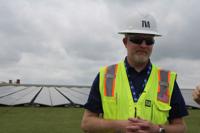
Tennessee Valley Authority Civil Projects Group General Manager for Strategy and Engineering Patrick Kiser said Project Phoenix is “homegrown technology” that’s driving the solar industry forward.
He emphasized that Project Phoenix positions TVA as a company that is helping drive the solar industry forward.
“It’s American ingenuity. It’s American innovation that’s driving a new way of thinking and providing opportunity for us to expand the potential for solar development,” Kiser said.
link