



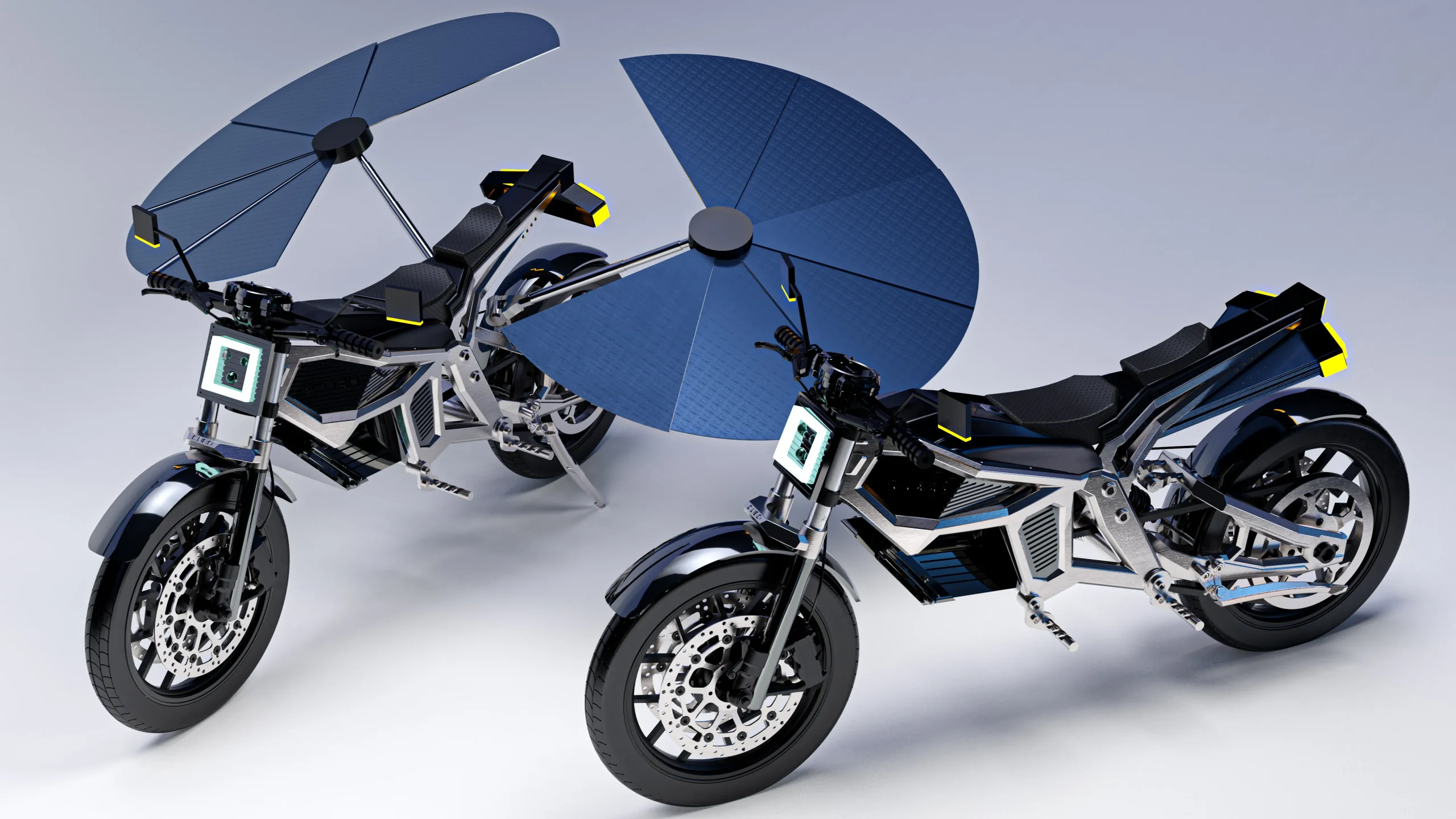
Mask Architects introduces SOLARIS, a self-charging motorcycle developed at the meeting point of architectural thinking and industrial design. The project foregrounds renewable energy through a compact solar-based system that enables the vehicle to operate autonomously. Its modular configuration reflects the studio’s interest in intelligent assemblies, where structure, technology, and sustainability function as an integrated design strategy.
World’s first fully solar-powered autonomous motorcycle

Founded by Öznur Pınar Cer and Danilo Petta, who are recognized as inventors, designers, and architects, it blends cutting-edge technologies with architectural and industrial design to address modern challenges. Their mission is to leverage technology to improve communities’ quality of life and address fundamental human needs, such as access to essential resources, through innovative, sustainable solutions.
Designed for the world’s first eco-tourism-based resort, the BAOBAB Luxury Safari Resort in Africa, it features an intelligent system that produces its own water through air-to-water technology, powered by transparent solar devices integrated into the curtain-glass façade. This parallels the SOLARIS mission to provide essential, independent mobility in infrastructure-scarce regions.
The Unifying Vision and Technological Integrity
The design approach to SOLARIS prioritizes energy resilience and self-reliance from architecture to mobility platform and is centered on advanced autonomous energy management and material science, demonstrating that the vehicle is engineered first as a miniature, self-sustaining ecosystem.
The project eliminates dependence on fuel, commercial charging networks, or external electrical grids. The self-sustaining system of the motorcycle works completely on a solar-powered mechanism, as an electric vehicle and an autonomous charging station. This approach reimagines global mobility and aims to create a future that generates power directly from renewable sources.
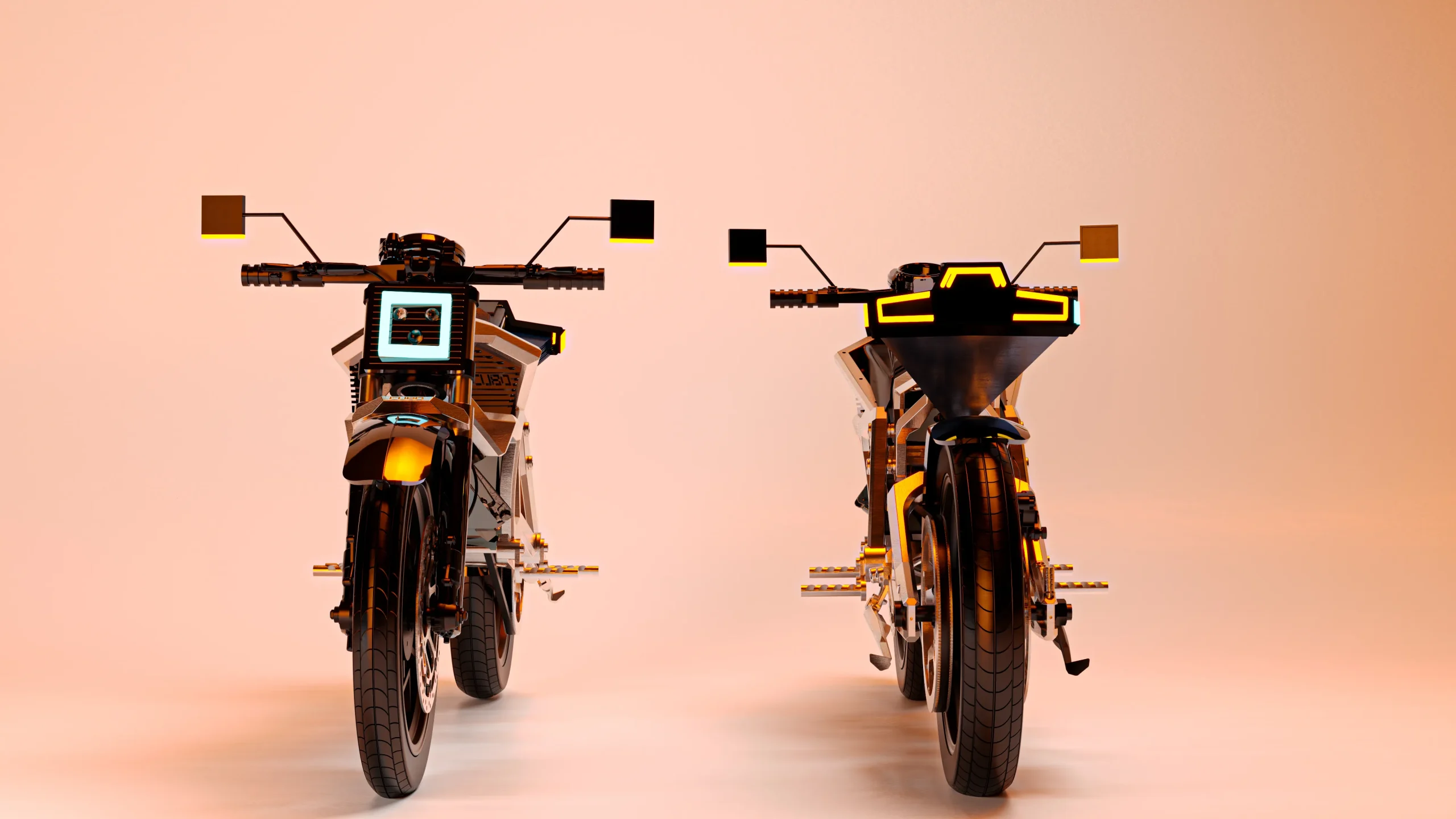
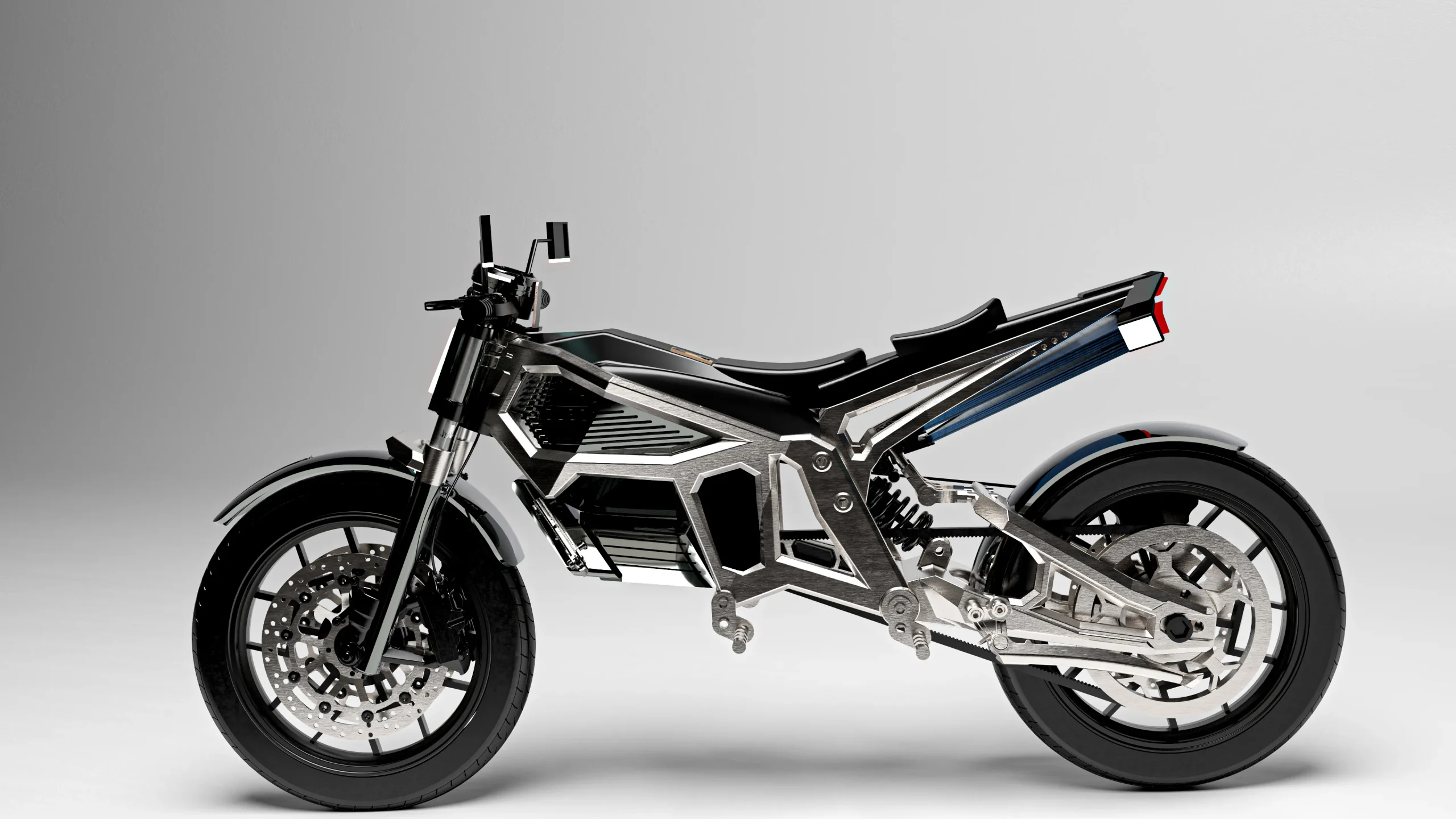
The architecture of SOLARIS is deeply rooted in functional biomimicry, drawing inspiration from the movements and structural proportions of a leopard. This influences the vehicle’s aesthetics and structural qualities, supporting engineering requirements such as balance, performance, and airflow. Beneath its biomimetic bodywork, the structural engineering focuses on maximizing energy efficiency through weight reduction and kinetic energy recovery.
Lightweight and Robust Construction
SOLARIS features an aluminum–carbon composite construction, which maintains low weight and minimizes vehicle mass. Material science is directly linked to energy conservation, as a heavier vehicle would require the energy from the integrated lithium battery, placing greater demand on straining the solar generation capabilities.
Propulsion and Energy Recovery
Powered by a high-torque electric motor, the motorcycle integrates an optimized propulsion system. The highly efficient, closed-loop energy management system highlights the functional interdependence between advanced material science, aerodynamics, and the PV collection system, all engineered to conserve the limited available power.
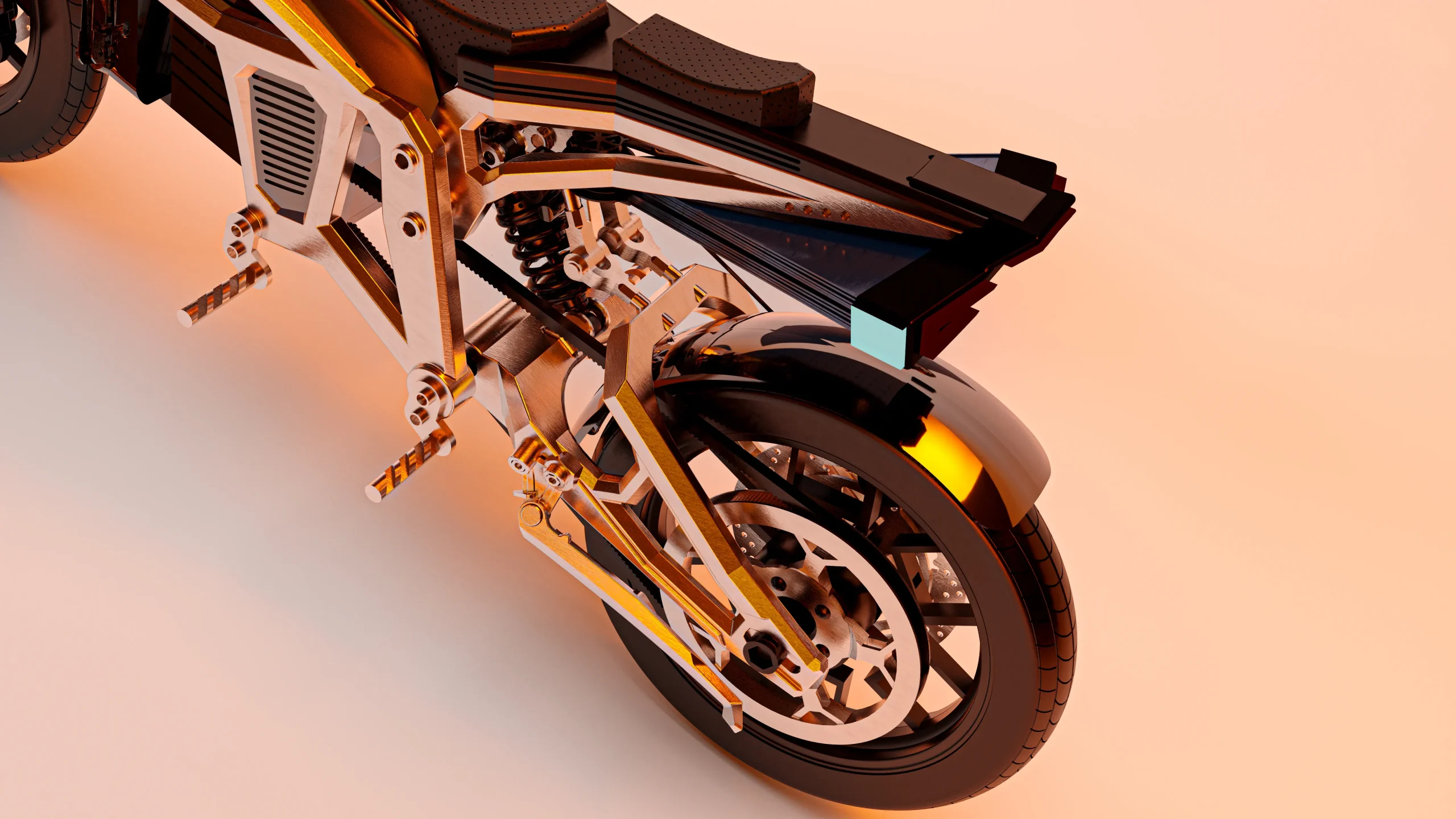
To manage this complex, autonomous power generation cycle, Mask Architects developed an intelligent Solar-Energy Management System (SEMS). The SEMS is designed to track and optimize three critical parameters in real time: energy collection, storage levels within the lithium battery, and energy output to the motor.
The Retractable Photovoltaic Mechanism
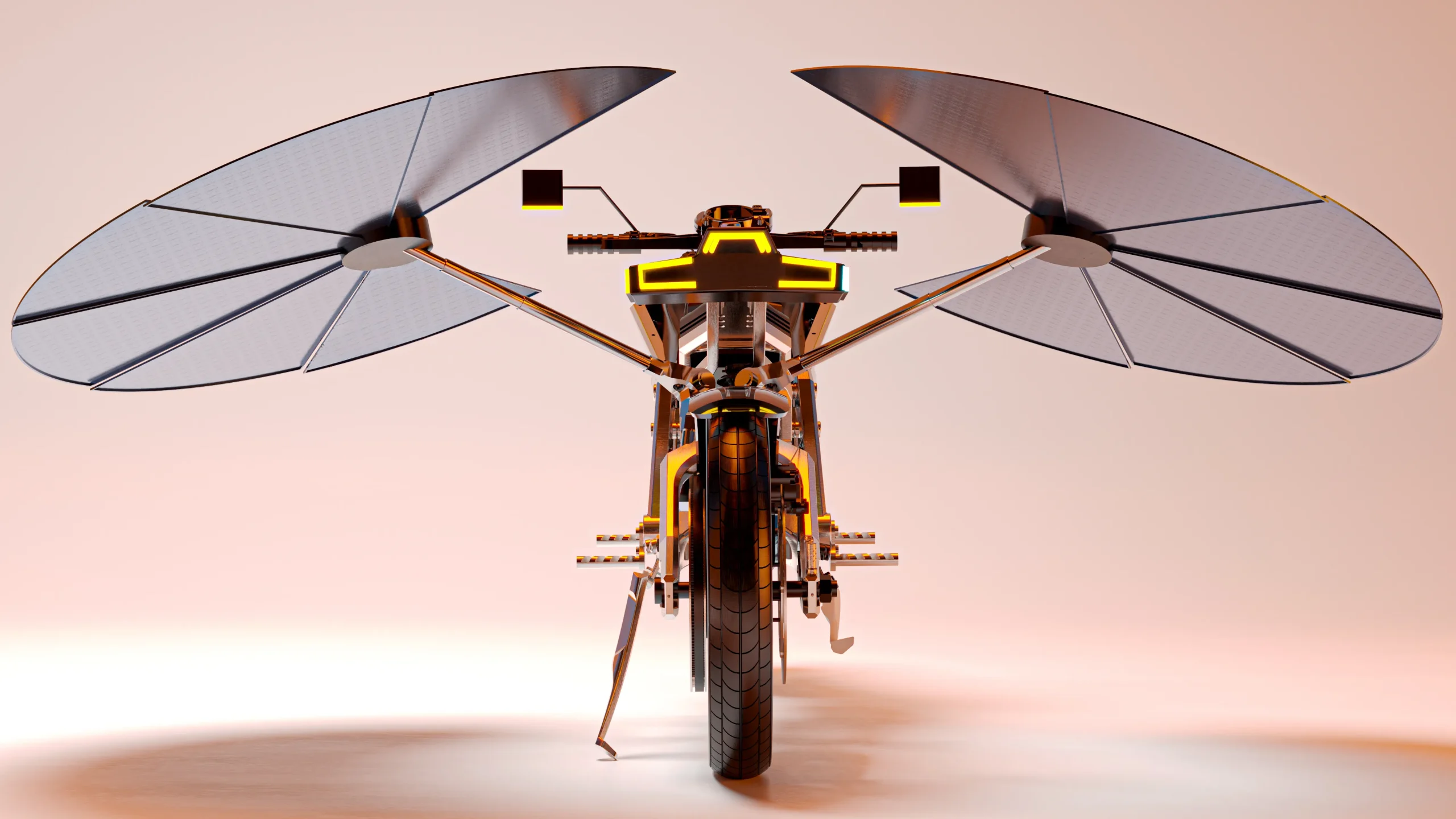
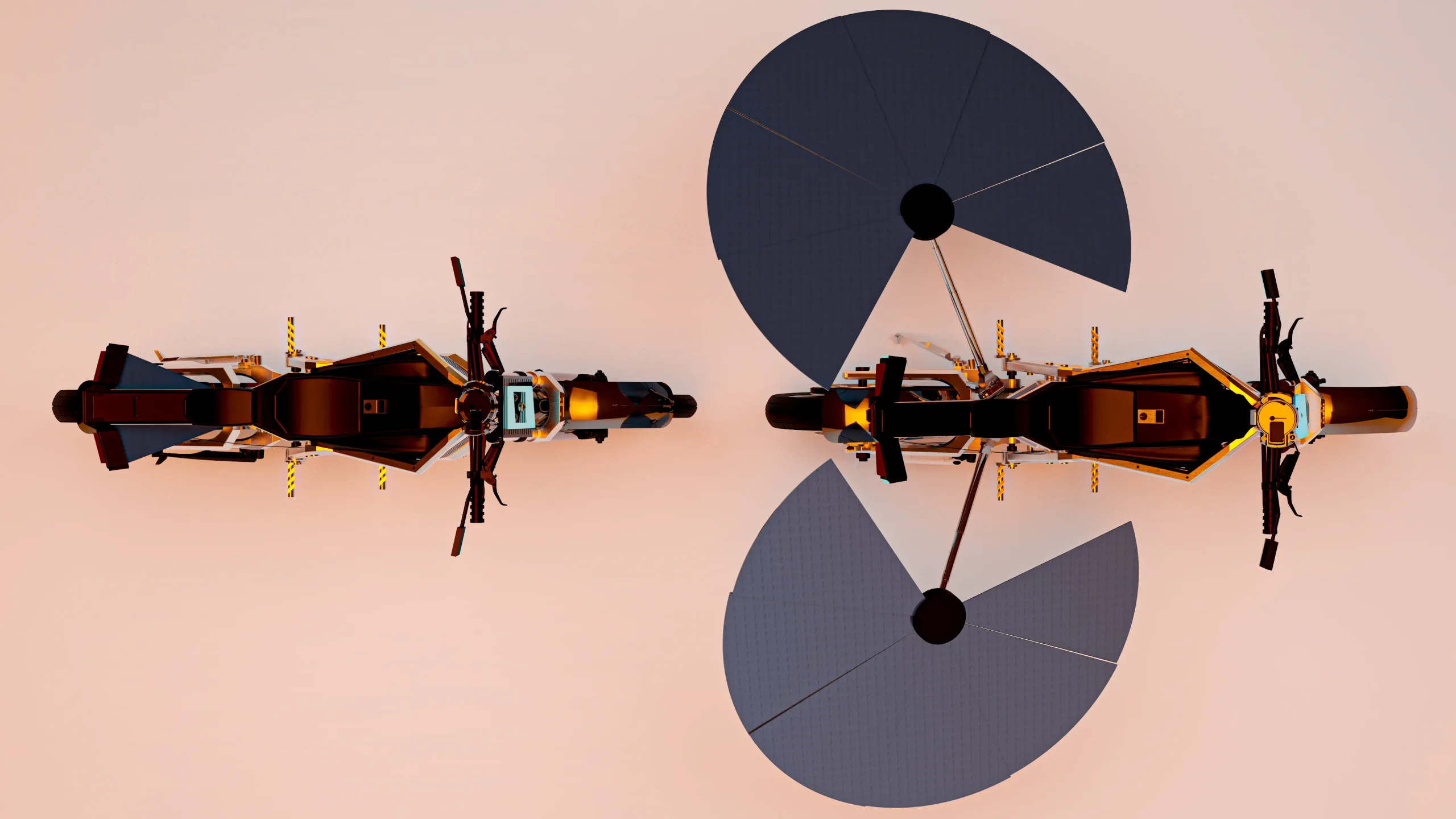
The central defining feature of SOLARIS is its set of retractable, circular photovoltaic wings. These high-efficiency solar panels are integrated seamlessly into the design. When the motorcycle is parked, the wings automatically unfold and expand outward. This deployment transforms the bike into a compact, autonomous charging station, actively maximizing solar exposure.
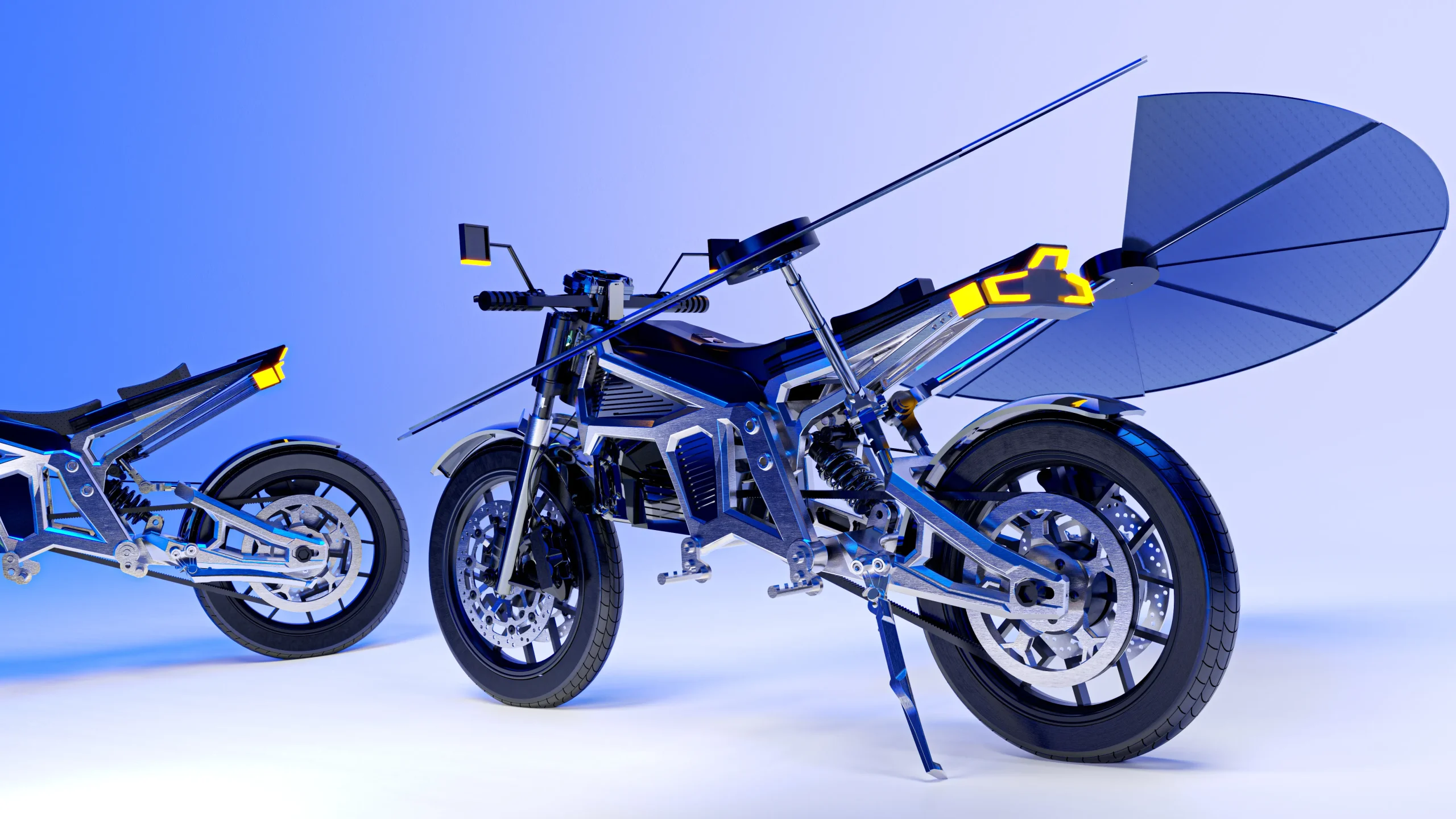
This constant monitoring ensures the system operates at peak efficiency, maximizing the harvest from the deployed solar wings and regulating the energy discharge during operation. Riders maintain control and visibility over this self-sustaining process through a digital cockpit integrated into the motorcycle, with the option for connectivity via a mobile application that displays performance and charging data.
SOLARIS Project Details
Architects: MASK Architects
Designers: Danilo Petta, Oznur Pinar Cer
Renders: © MASK Architects
link